





Off the Grid: Why the Pentagon Is Planning for 90 Days Without Power and Britain Wants You Stocked Up
Off the Grid: Why the Pentagon Is Planning for 90 Days Without Power (and Britain Wants You Stocked Up)
Last week, two governments on opposite sides of the Atlantic said pretty much the same thing. Don’t assume the power will always be on.
In the U.S., the Pentagon told its biggest bases to get ready to run for 90 days without public power, water or fuel. In the UK, the government asked every household to keep enough on hand to get through three days without those same services.
The two plans aren’t connected, and nobody is saying war is around the corner. Fortune points out that neither government has called a conflict imminent. Still, the timing is hard to ignore. Both are planning for the day the grid goes down, and that’s worth a closer look if you’ve been putting off your own emergency kit.
People didn’t wait around. Within a few days of the UK announcement, grocery chain Iceland saw tinned food sales jump 40%, Maplin’s torch sales nearly quadrupled, and Ocado ran out of bottled water, beans and soup.
The Pentagon’s 90-Day Plan: Bases That Can Run on Their Own
The program is called FORTRESS. Defense Secretary Pete Hegseth first announced it in September as a way to give bases power that doesn’t depend on the civilian grid. According to internal planning documents reported by Fox News, the goal now goes further. Every major base in the continental U.S. should be able to keep essential operations going for at least 90 days, with its own power, water, fuel and communications.
“We don’t want to rely on standard civilian municipal infrastructure to run our national defense,” Pentagon spokesperson Sean Parnell told Fox. He also put it more bluntly: “Power is combat now.”
- The Risk: Parnell expects the next big war to be fought on several fronts at once. That could mean damaged power grids, jammed GPS, attacks on satellites and broken supply chains right here at home. If a base runs on the same grid as the town next door, it goes dark when the town does. Fortune also points to Volt Typhoon, a Chinese state-backed hacking group that U.S. agencies say broke into American infrastructure networks.
- The Response: Bases are adding their own microgrids that can cut loose from the public grid, along with big battery banks and small nuclear reactors. The Army has already set aside up to $2.2 billion for microreactors at five bases, including Fort Bragg and Fort Hood. Bases are also stocking up on fuel, spare parts, critical minerals and medical supplies.
- The Factory Backup: An existing program called the Civil Reserve Manufacturing Network will line up private factories that could switch over to making military gear in a crisis.
Don’t expect it to happen overnight, though. A senior defense official said the Pentagon is still reviewing roughly 500 bases, and Fortune reports full rollout could take decades and cost tens of billions of dollars, maybe more.
Britain’s “Be Ready” Campaign: Three Days on Your Own
On October 22, the UK government launched Be Ready. It’s the first step in a three-year campaign, and the main message is simple. Every household should be able to handle three days of disruption on its own. France, Ireland and the Netherlands already tell their citizens the same thing, and the EU wants all its residents to keep at least 72 hours of supplies.
Prime Minister Andy Burnham kept it low-key. “It’s about just taking sensible measures to have enough in the house,” he said at a resilience summit in Liverpool. He even admitted he keeps beans, soup and Twiglets at home.
- The Risk: The government mostly points to bad weather, like last winter’s storms and this summer’s wildfires, which knocked out power, water, phones and internet for some people. But security officials have bigger worries too. Security Minister Dan Jarvis’s statement to Parliament mentioned AI and “hostile activity from Russia and Iran”. The UK’s cyber agency dealt with more than 200 attacks on critical infrastructure in a single year, and it believes about three quarters came from Russia, China or Iran.
- The Response: The official checklist asks for 3 liters of drinking water per person per day, no-cook food, a torch with spare batteries, a wind-up or battery radio, a charged power bank, blankets, a first aid kit, cash, copies of ID, and supplies for babies and pets.
- The Goal: If most families can look after themselves for three days, emergency crews can focus on the people who really need help. More than 500 organizations across the UK have signed on to spread the word.
Building Your Own Grid-Down Kit
A military base is planning for three months. Your family probably needs to plan for three days. The basics don’t change much, though. You want water, food, light, power and first aid you can count on. Here in the U.S., Ready.gov gives almost the same advice as Britain’s Be Ready campaign.
1. Start With Water
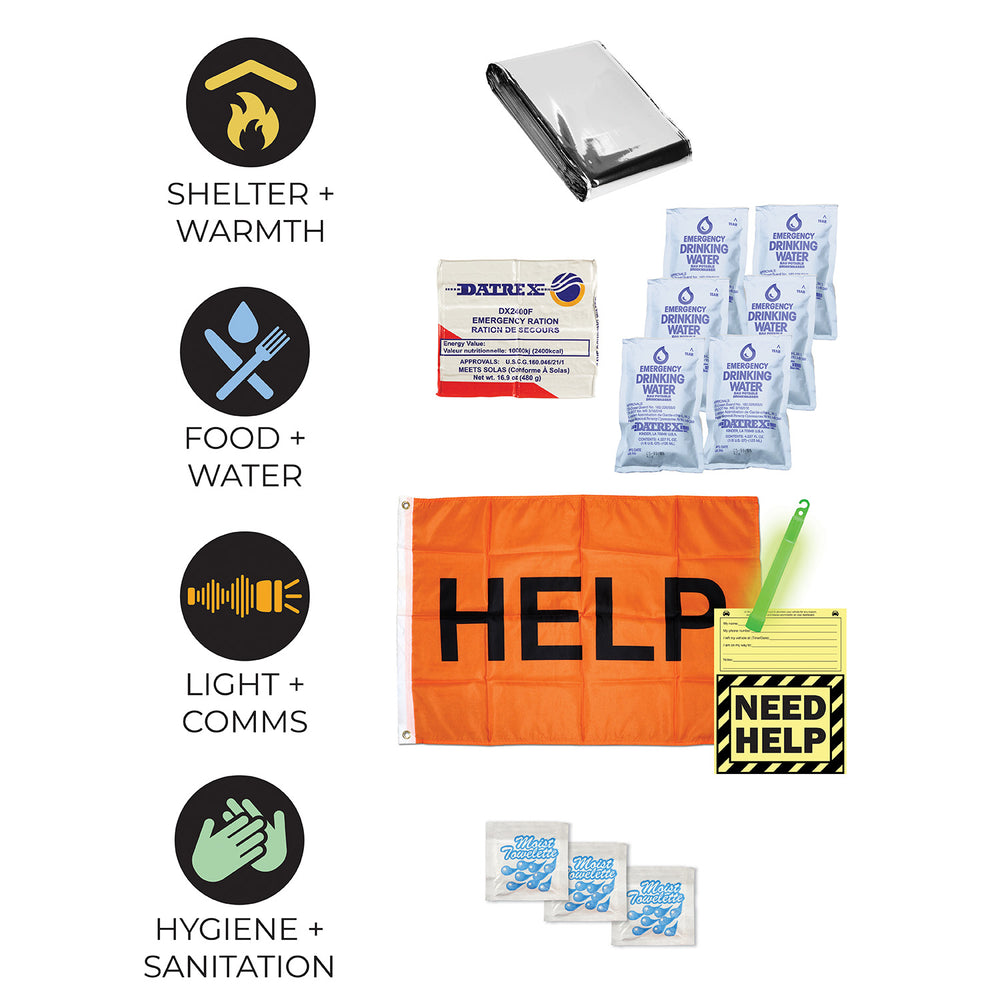
Plan on about one gallon per person per day, which covers drinking and basic washing, according to Ready.gov. Our emergency food and water has long shelf-life water pouches, so you can store it and forget about it until you need it.
2. Food You Don’t Have to Cook
If the power’s out, your stove and microwave might be too. Pick food you can eat straight from the package. The emergency ration bars in our food and water collection last for years on a shelf.
3. Your Own Little Microgrid
You don’t need a nuclear reactor. A good flashlight, extra batteries, a charged power bank and a hand-crank radio will keep you seeing, hearing the news and charging your phone. You’ll find all of that in our light and communication gear.
4. First Aid Supplies
Both governments put a first aid kit on their lists, and for good reason. A blackout doesn’t stop cuts, burns or sprains, and help could take longer to reach you. Our first aid kits come in sizes for home, car and office.
5. Or Get Everything at Once
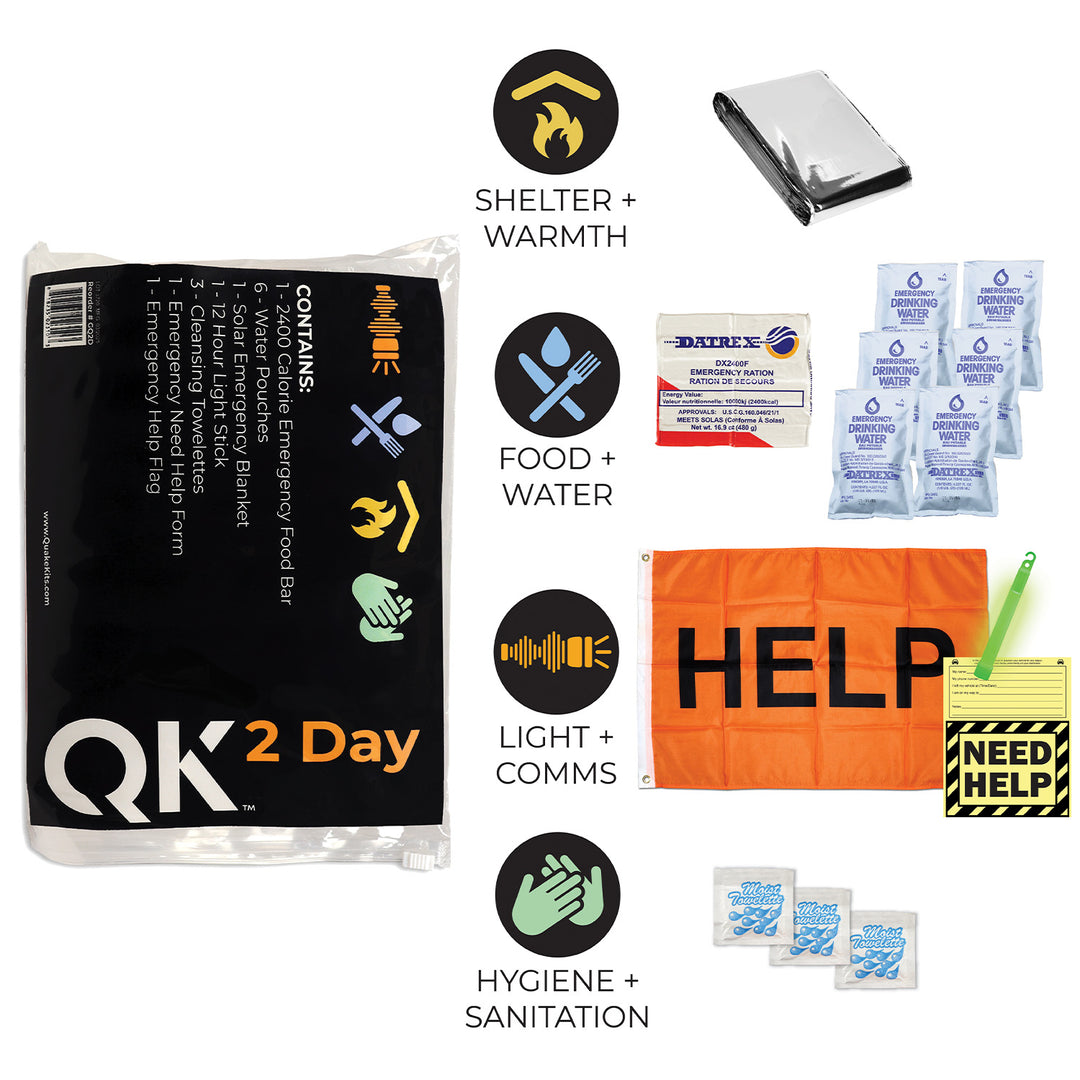
Not sure where to start? Our emergency kits put water, food, light, shelter and first aid in one grab-and-go bag, ready for your whole household.
A Few Tips From Us
- Shop before everyone else does: British shoppers emptied shelves of water, beans and radios within days of the announcement. It’s a lot easier to build a kit when nobody’s panicking.
- Keep some cash at home: Card readers and ATMs need power and internet to work, so small bills can come in handy.
- Make copies of important papers: Put copies of your IDs, insurance cards and medication list in a waterproof bag inside your kit.
- Remember the little ones and the furry ones: Babies and pets need their own food and water. We carry pet supplies built for emergencies.
- Check your kit twice a year: Look at expiration dates on water, food, batteries and medicine. Daylight saving time is an easy reminder.
- Put a kit in the car too: You won’t always be home when the power goes out. A roadside kit in each vehicle covers you on the road.
The Pentagon is getting ready for 90 days. Is your household ready for three? Start with our emergency kits, add food and water, and round it out with a solid first aid kit. You’ll sleep a little better knowing it’s there




Leave a comment